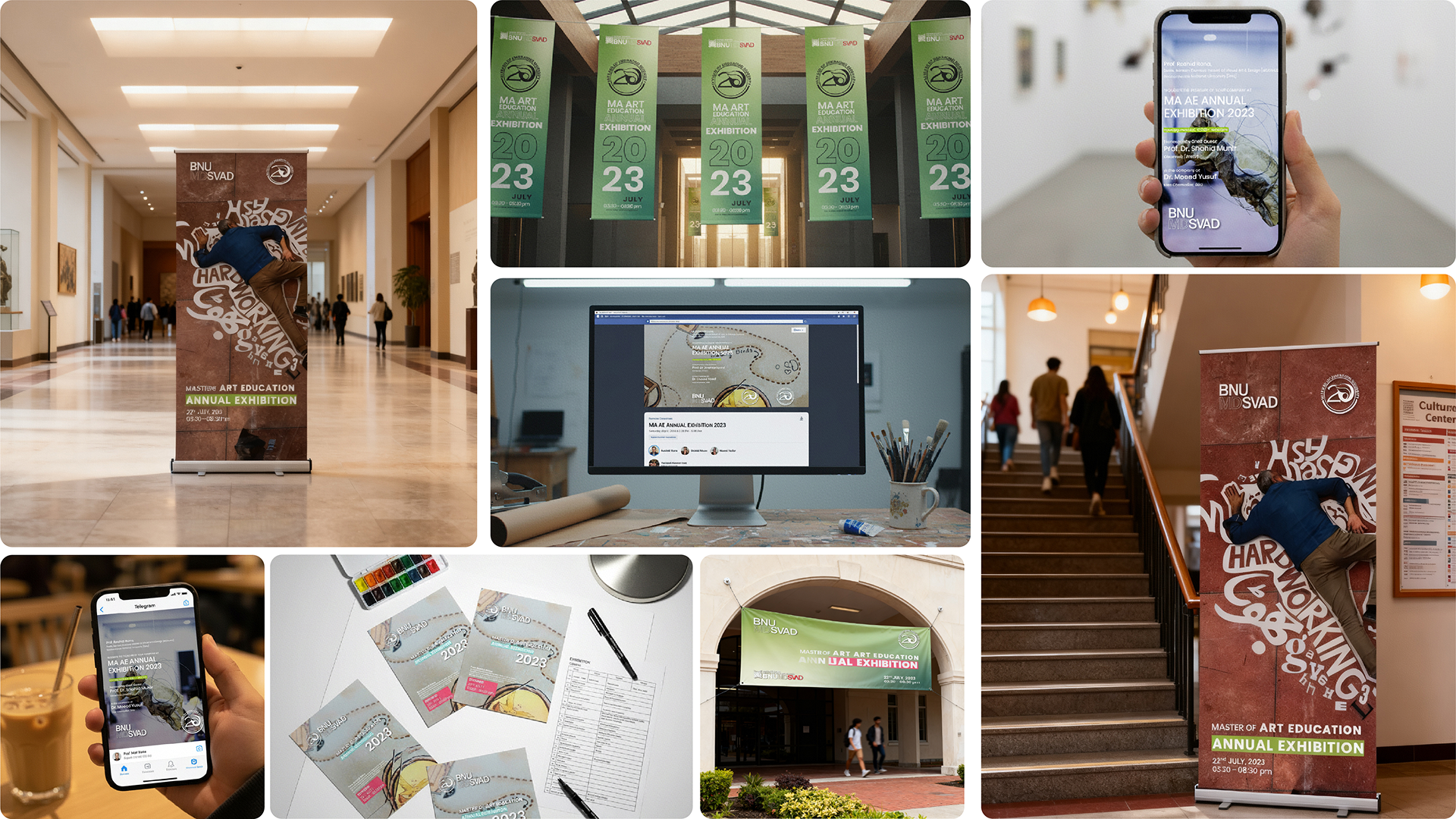
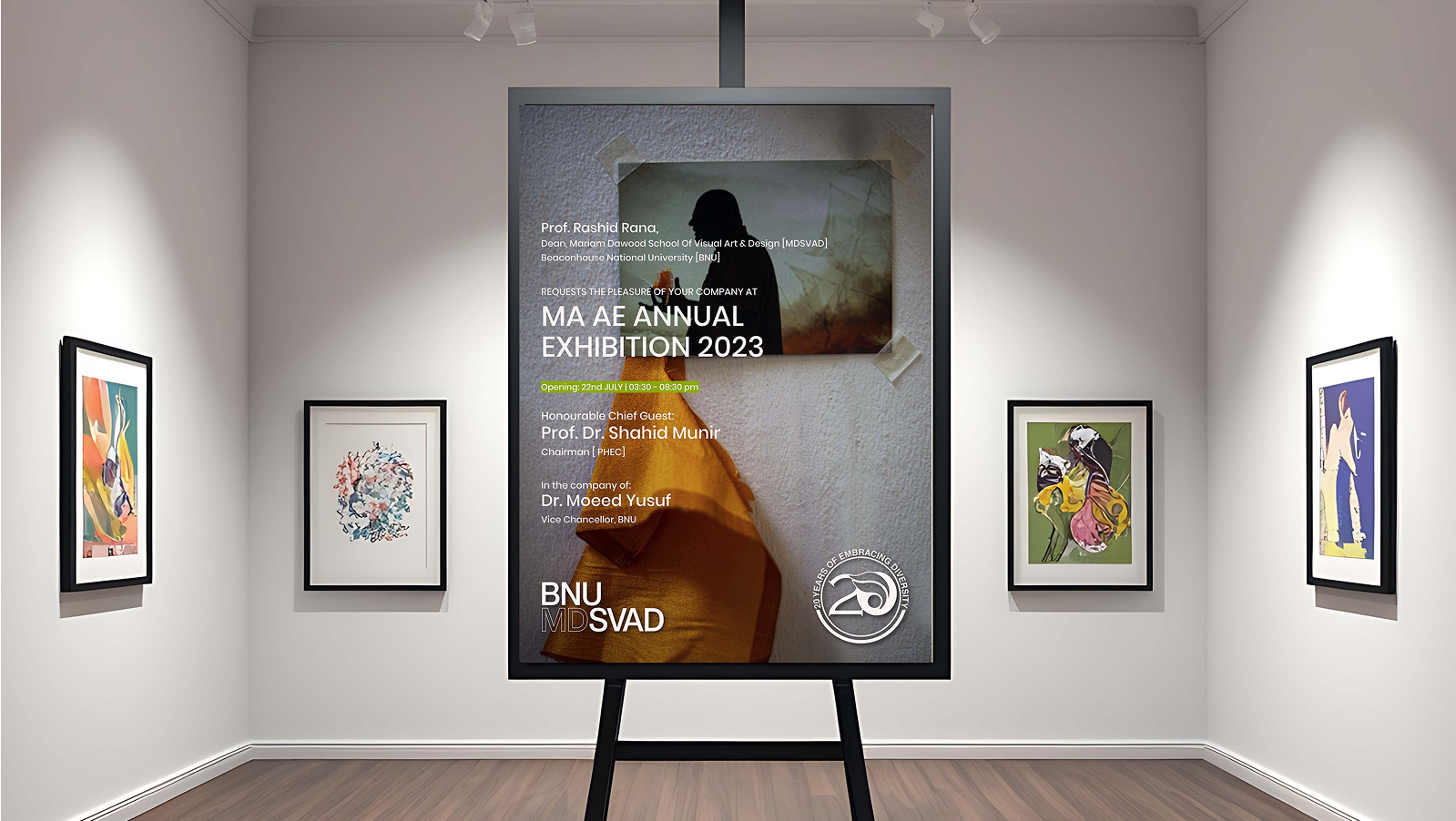
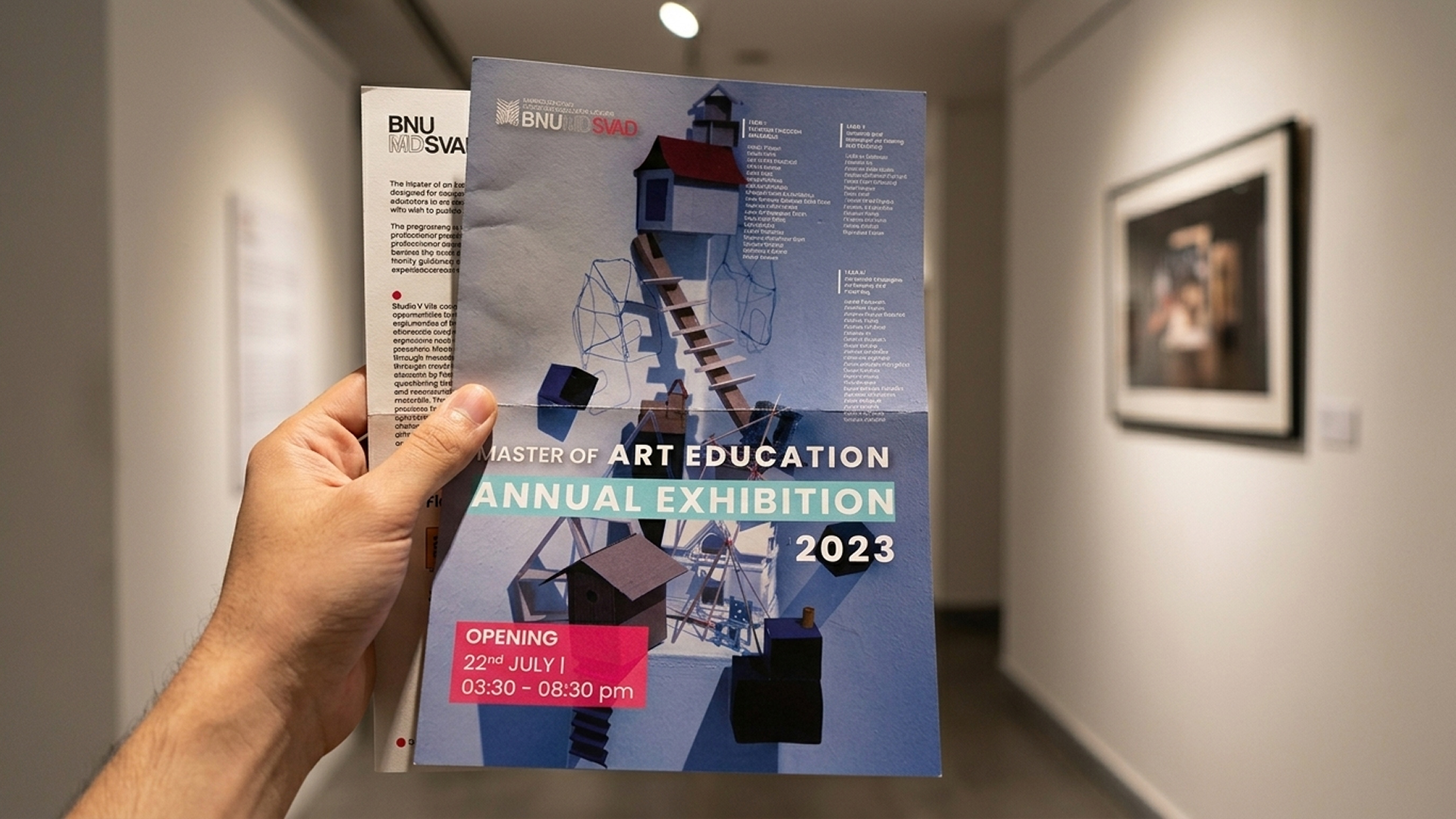
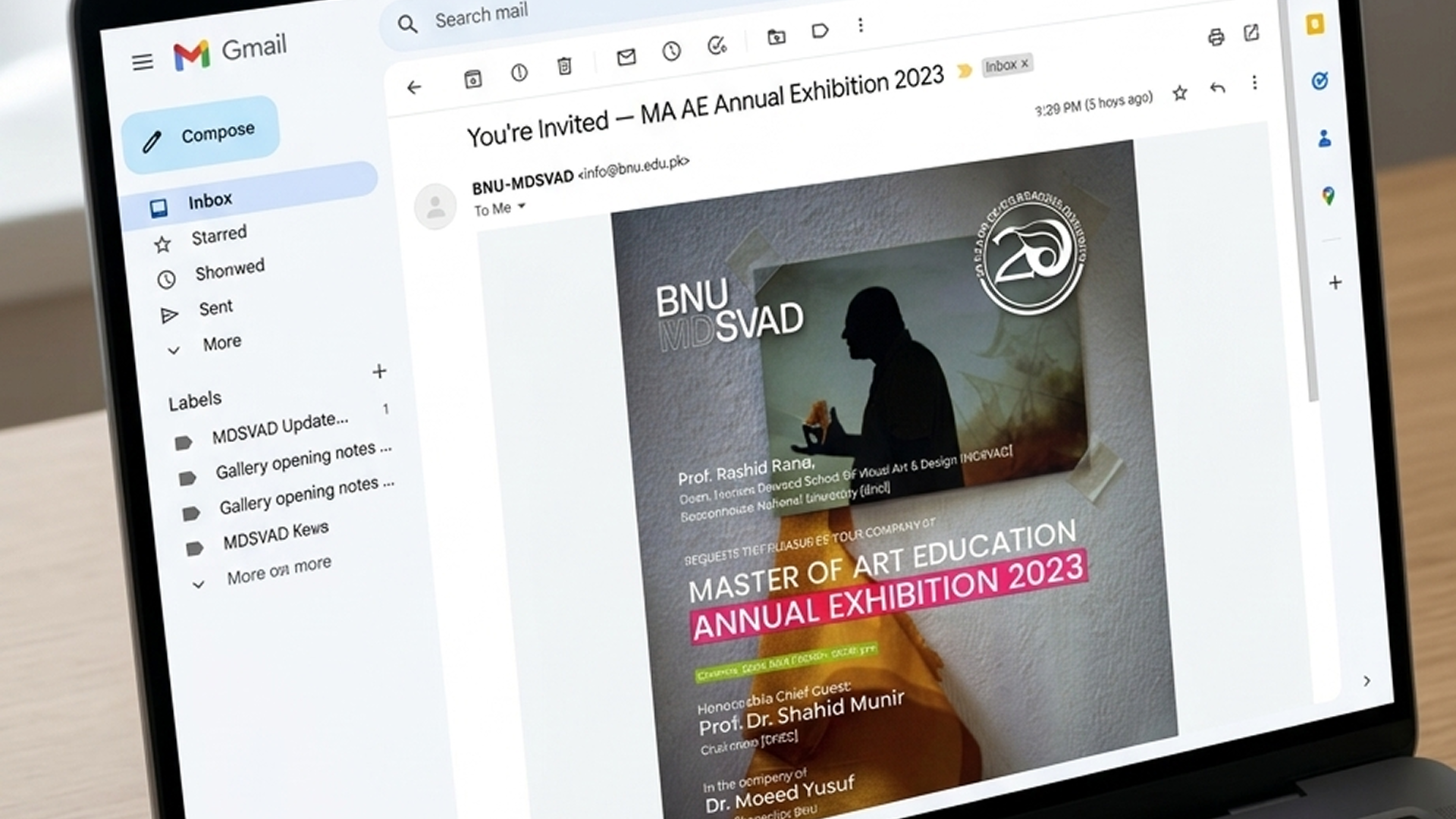
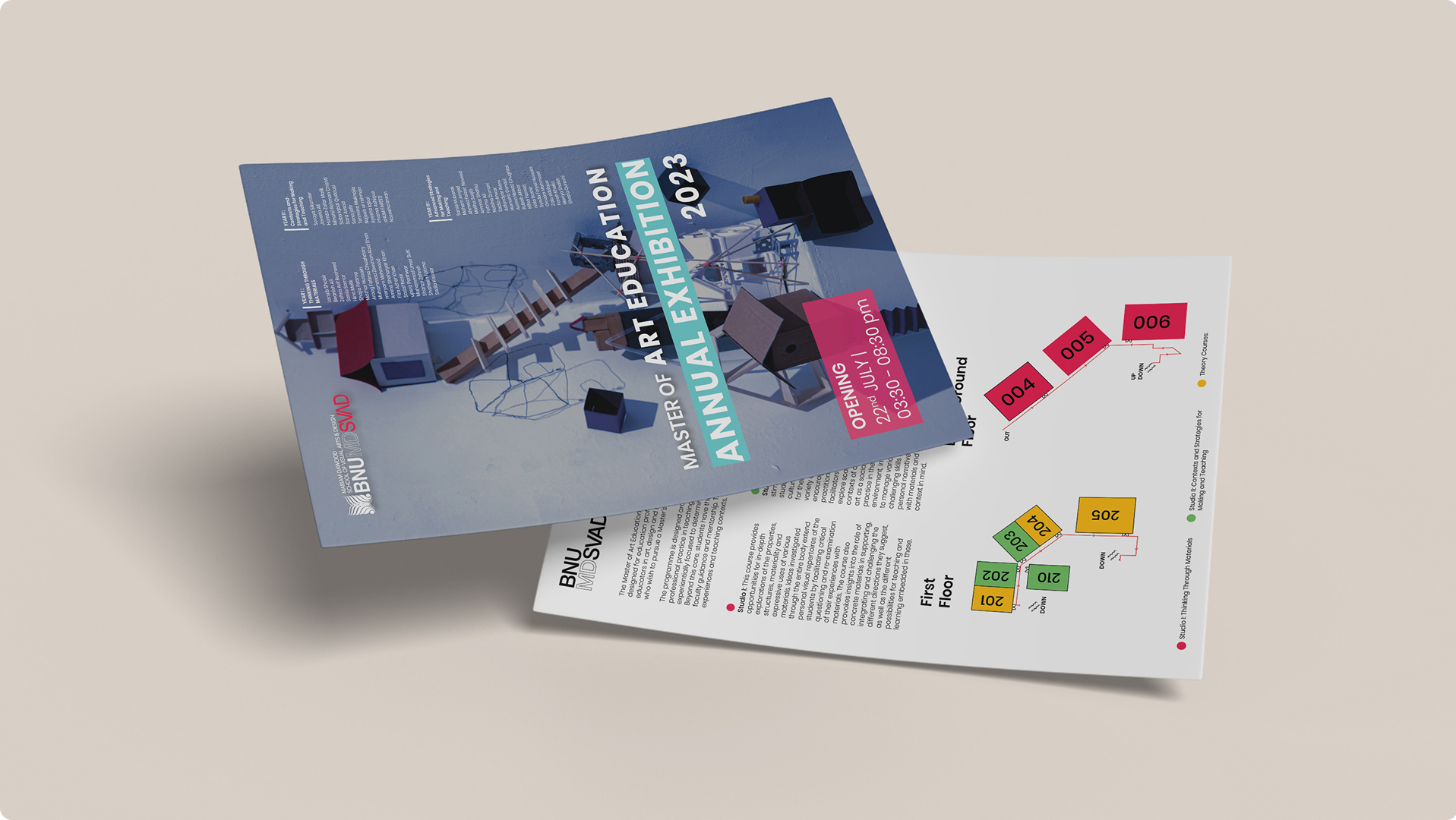
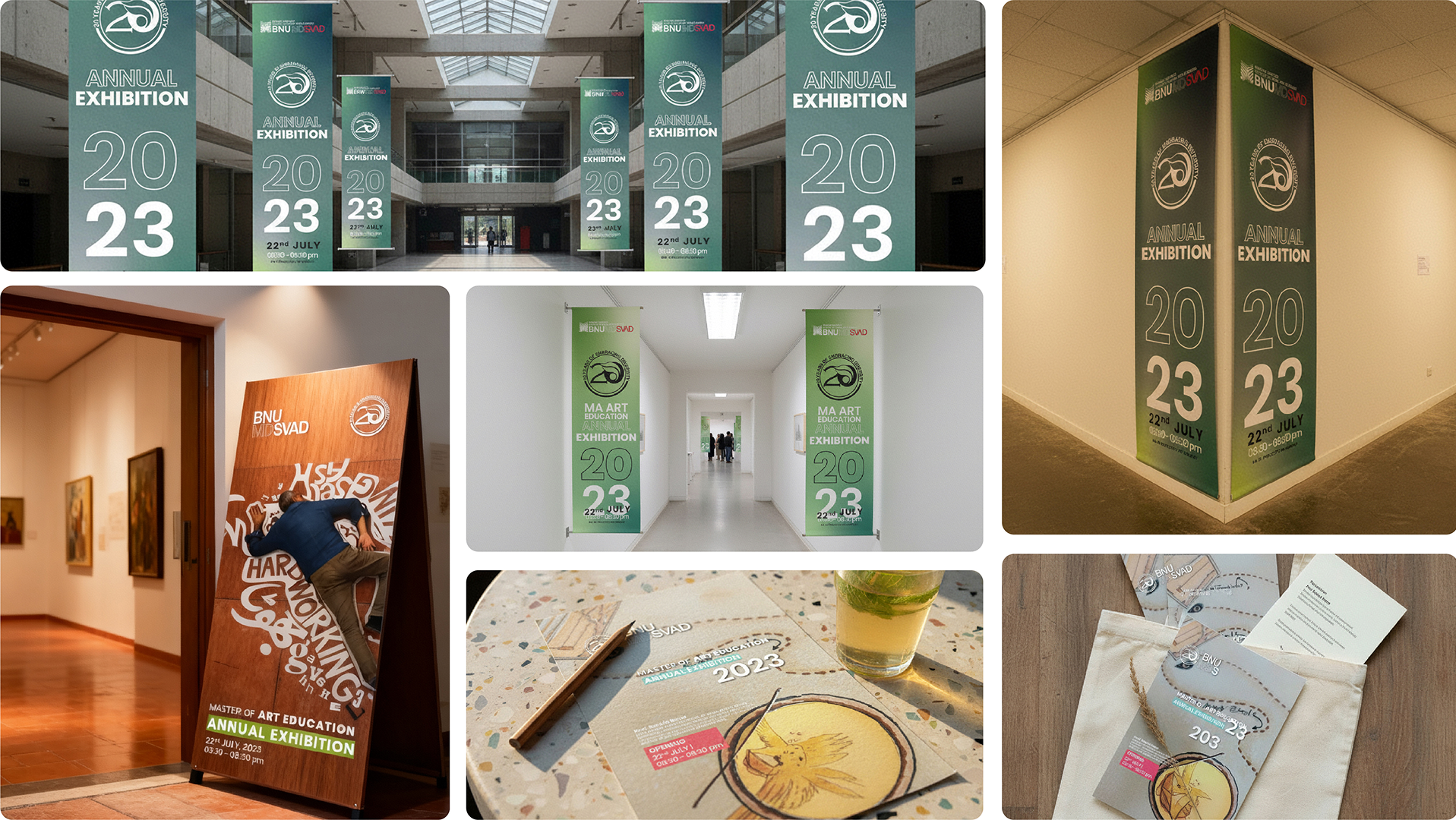
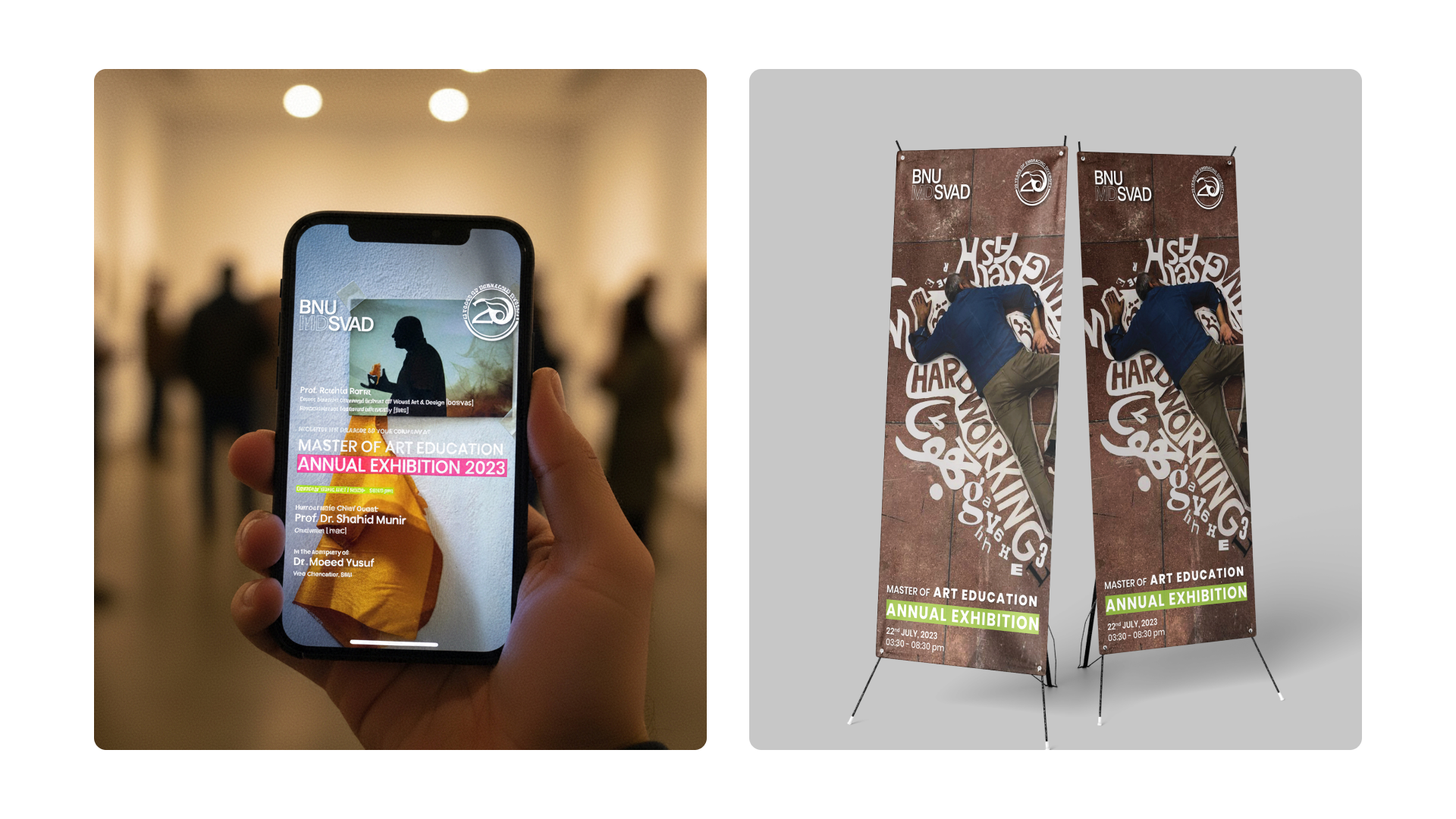
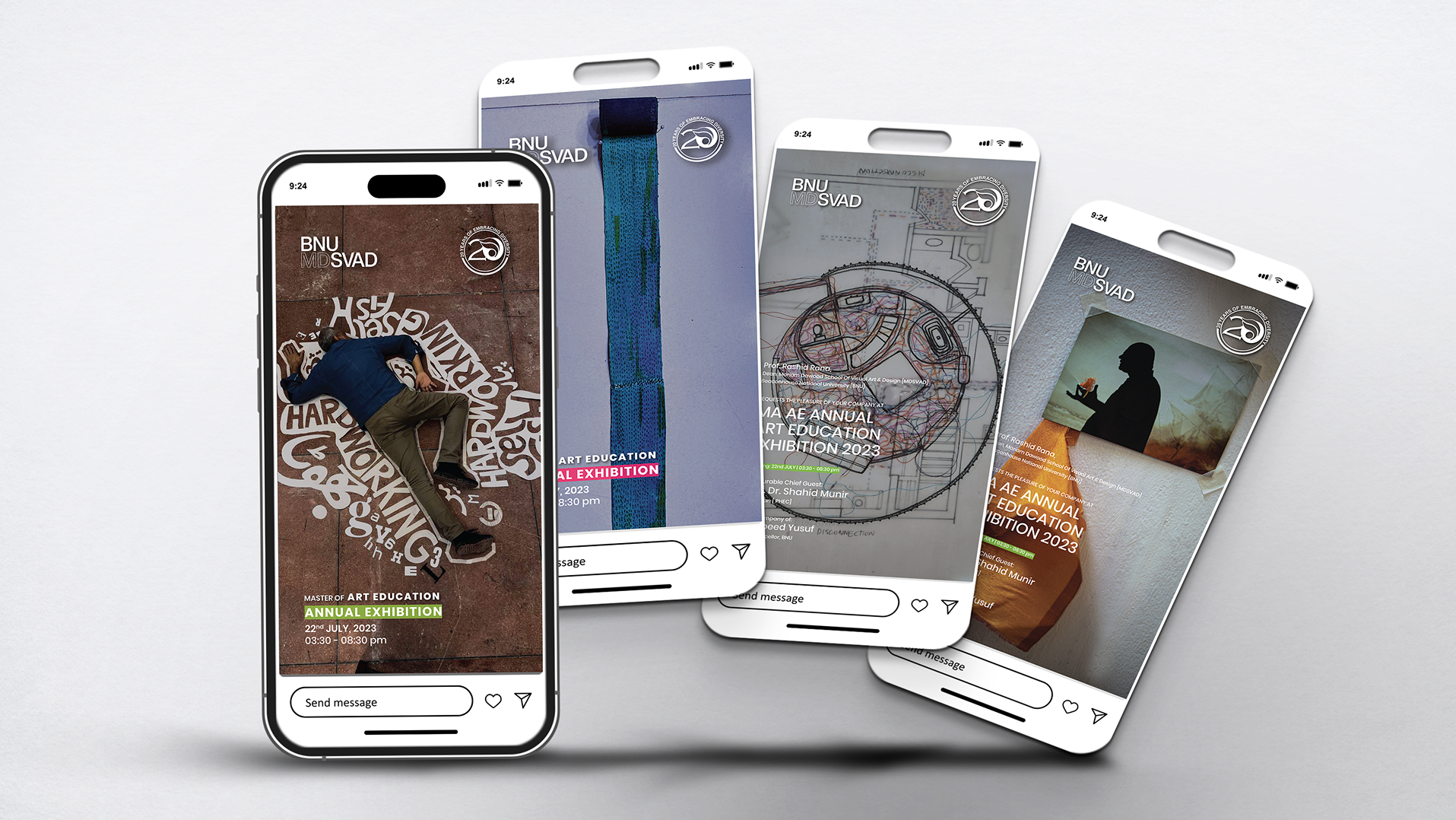
The student thesis photographs fell into two distinct visual registers
without any prompting. Some were warm — organic, hand-made, body-
based, tactile. Others were cool — sculptural, calligraphic, material-
process, architectural. Forcing both groups into a single colour mood
would have flattened them into sameness. The dual register preserved
what made each piece of work distinct.
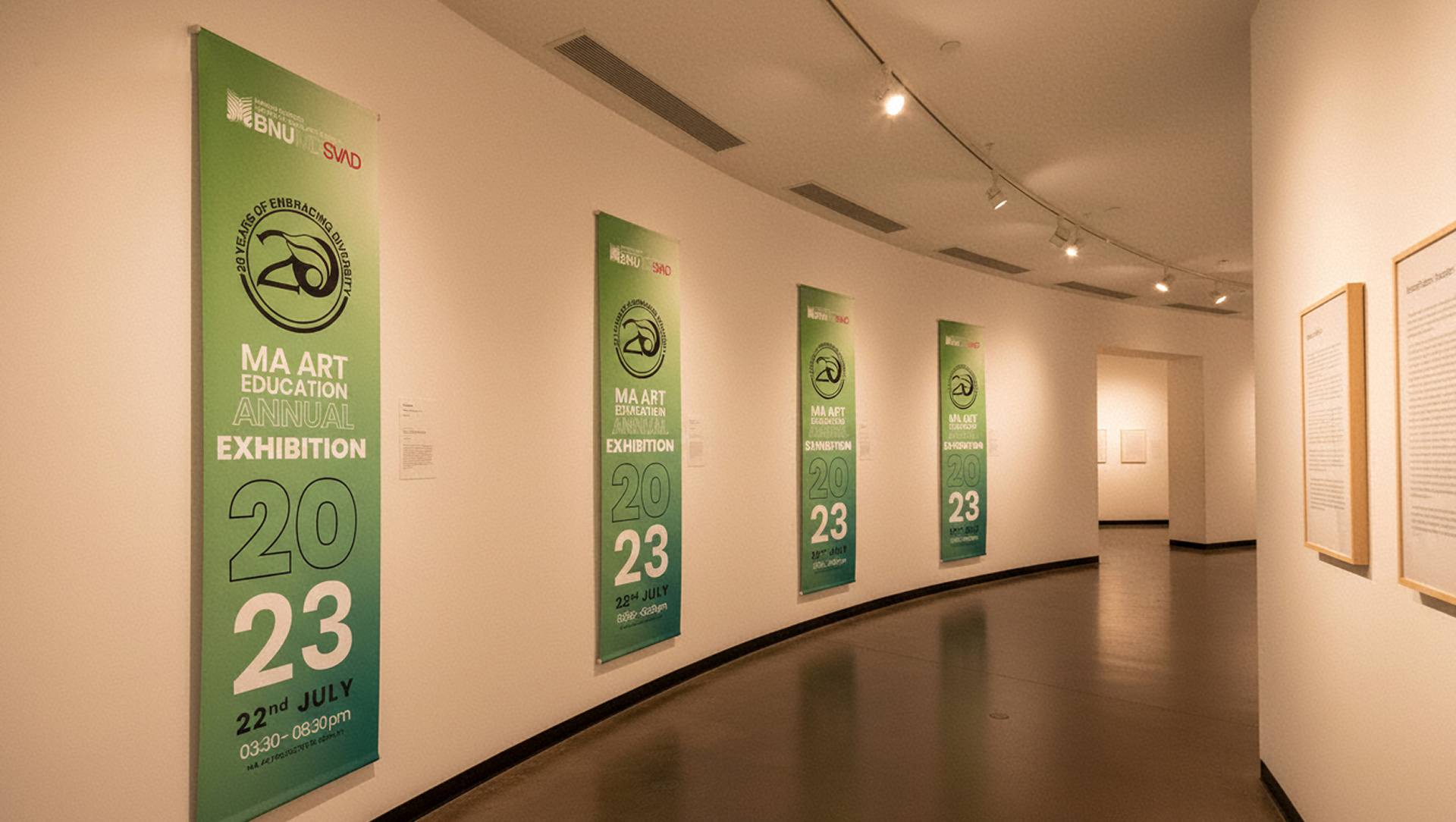
Eight formats, one system, no room for inconsistency. The rule was simple:
strict typographic structure, one accent bar per piece, student work as
the dominant image. When the rules are clear, composition follows. When
composition follows, chaos does not.